Projects

IRE — 40 MW Waste-to-Energy Facility, Lagos
Project Feature  ·  Lagos State  ·  2026

Where Waste Becomes
the Power Nigeria Needs

IRE’s 40 MW pyrolysis-to-power facility turns Lagos’s plastic and tire waste into clean, reliable baseload electricity — solving two crises with one solution.

Installed Capacity
40 MW
Grid Export
35 MW
Annual Revenue
$47.4M
EBITDA Margin
72.8%
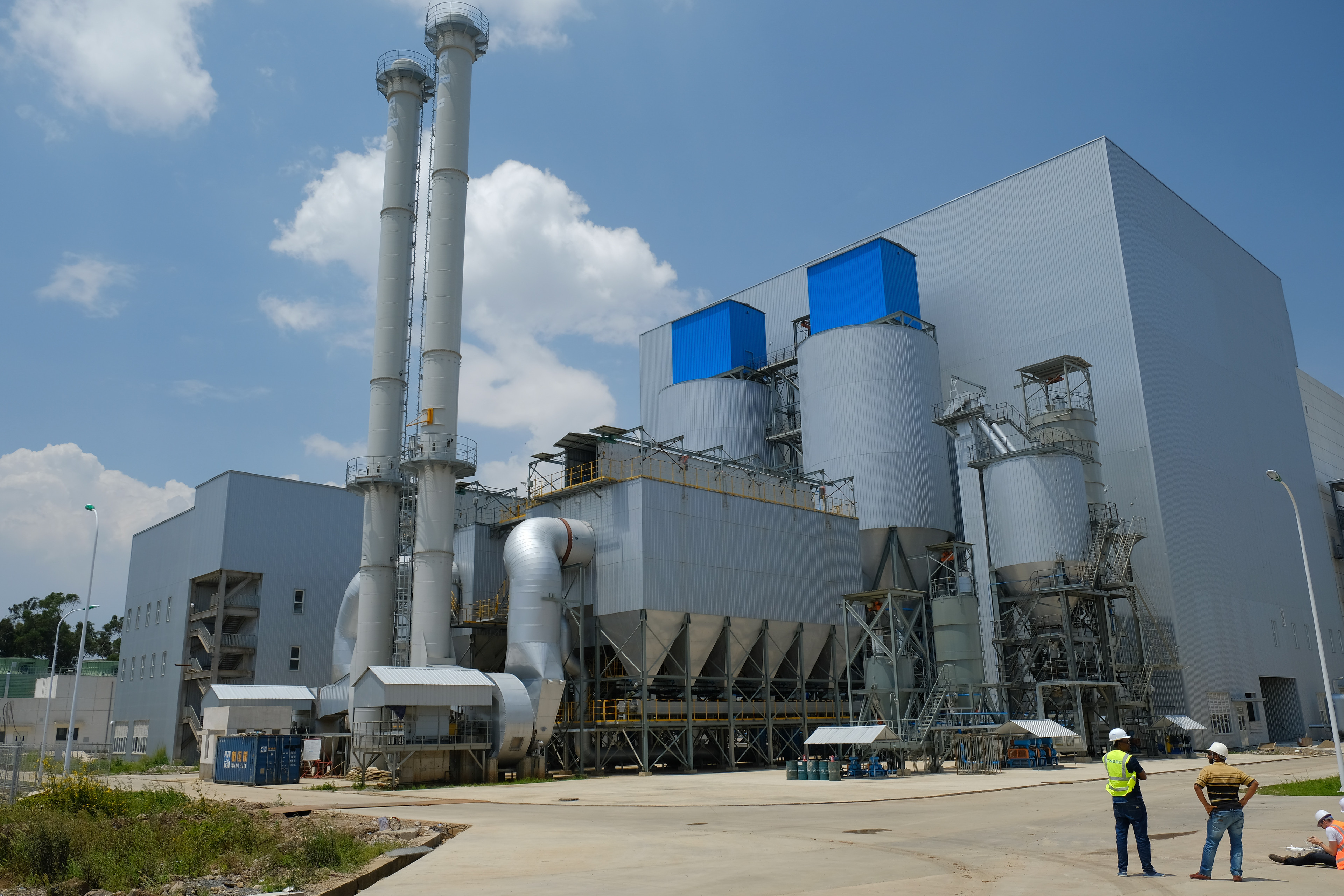
Reppie Waste-to-Energy Facility
Reppie Waste-to-Energy Plant, Addis Ababa — Africa’s first utility-scale WtE facility  ·  Photo: WisdomAfrica / CC BY-SA 4.0
01
The Challenge

Two Crises.
One Transformative Answer.

Nigeria generates over 25 million tonnes of solid waste annually, yet barely 20% is formally managed. Simultaneously, the country operates at a chronic power deficit that chokes industrial growth, stifles investment, and costs the economy an estimated $28 billion each year in lost productivity. For Lagos — Africa’s largest megacity, producing over 13,000 tonnes of waste per day — both pressures are felt most acutely.

Polyolefin plastics (PP/PE) and end-of-life tires pile up in open dumps, clog drainage systems, and pollute waterways. They are also, in the right hands, extraordinarily high-energy materials — with calorific values rivalling diesel fuel.

“The question was never whether Lagos had enough waste to power a city. The question was whether anyone had the resolve to build the machine to do it.”

International Reliance Energy & Allied Services Limited (IRE) built that machine. The 40 MW Waste-to-Energy Facility in Lagos State is the answer to both challenges simultaneously — a baseload power plant fuelled entirely by the waste streams that Lagos cannot get rid of fast enough.

02
The Solution

Pyrolysis-to-Power: The Technology Doing the Heavy Lifting

At the heart of this facility is a proven thermochemical process called pyrolysis — the high-temperature decomposition of organic materials in the absence of oxygen. When applied to plastics and tires, pyrolysis doesn’t burn the waste. It cracks it at a molecular level, releasing two high-value fuel streams: a combustible gas (Pyro-Gas) and a diesel-grade oil (Pyro-Oil).

These fuels feed directly into four 10 MW dual-fuel gas turbine generators, producing 40 MW of gross electricity — of which 35 MW flows continuously to industrial off-takers and the grid.

1

Feedstock Intake

200 tonnes of waste per day — 100 t of PP/PE plastics and 100 t of end-of-life tires — arrives from sourcing networks across Lagos’s four aggregation zones: Apapa, Alimosho, Lekki, and Badagry.

2

Pyrolysis Conversion

Four parallel pyrolysis reactor lines process 50 tonnes each per day, thermally cracking materials at controlled temperatures to yield Pyro-Gas as the dominant fuel and Pyro-Oil as a stabilising co-fuel.

3

Gas Conditioning

Pyro-Gas undergoes multi-stage scrubbing and filtration — removing H₂S, particulates, and moisture — before admission to the turbines. Pyro-Oil is desulfurised and blended for safe dual-fuel combustion.

4

Power Generation

Four 10 MW gas turbine generators run continuously on the dual-fuel blend, producing 40 MW gross. Five megawatts powers the plant’s own operations; 35 MW exports to the grid at a continuous, bankable baseload rate.

Boiler systems inside WtE facility
Boiler and thermal processing systems, Reppie WtE Facility  ·  Photo: WisdomAfrica / CC BY-SA 4.0
03
By the Numbers

The Scale of What 200 Tonnes a Day Can Do

The engineering calculus behind this project is exacting. Here is what the plant produces every single day it operates — and every year thereafter.

16,241 Nm³/hr
Pyro-Gas produced per hour — sustaining 78.95% of turbine thermal demand
2.17 t/hr
Pyro-Oil produced per hour — load-stabilising secondary fuel for the turbines
840 MWh/day
Net electricity exported to the grid every single day of operation
306.6 GWh/yr
Annual grid export — enough to power hundreds of thousands of Nigerian homes
73,000 t/yr
Total waste diverted from Lagos landfills and waterways annually
35 % eff.
Thermal-to-electrical conversion efficiency — at or above industry benchmark
04
Feedstock & Supply

Abundance, Not Scarcity. Lagos Has More Than Enough.

A common concern for waste-to-energy projects is feedstock reliability — will the supply hold up at scale? At 200 tonnes per day, this facility requires less than 1.5% of Lagos’s total daily waste output. Supply is not a constraint. It is a managed logistics exercise.

IRE has mapped a four-zone sourcing architecture across metropolitan Lagos, drawing from a diversified network of material recovery facilities, transport and fleet garages, industrial estates, community collection networks, and private aggregators.

Plastics — 100 t/day

  • Major MRF operators: 40–50 t/day
  • Community collection networks: 17–23 t/day
  • Private aggregators: 13–20 t/day
  • Industrial estates (direct): 13–20 t/day

Waste Tires — 100 t/day

  • Transport & fleet garages: 30–40 t/day
  • Tire importers & dealers: 20–27 t/day
  • Scrap tire networks: 20–27 t/day
  • Municipal recovery: 13–20 t/day

A minimum seven-day buffer inventory of 1,400 tonnes is maintained on-site at all times, protecting the facility against any short-term supply disruption and ensuring the turbines never idle for lack of fuel.

05
Financial Performance

Strong Returns on a Clear Commercial Foundation

Power purchase revenue is structured against the NERC REFIT tariff of $154.71/MWh — a stable, regulated rate that provides long-term revenue certainty. At 35 MW continuous export, the financial performance of this facility is compelling by any infrastructure investment standard.

Key Financial Metrics
Annual Revenue
$47.4M
At $154.71/MWh NERC REFIT tariff, 35 MW continuous
Annual Net Profit
$34.5M
After total OPEX of $12.9M per annum
EBITDA Margin
72.8%
Exceptional operational efficiency at full output
Project IRR
18–22%
Projected internal rate of return across the investment cycle

Total capital expenditure stands at $210 million, covering four pyrolysis lines ($88M), four turbine generators ($48M), EPC and contingency provisions ($22M), civil works, gas conditioning, electrical and grid integration, and storage infrastructure. Payback is projected across a 7–9 year horizon, with the project delivering consistent annual growth of approximately 5% from Year 2 onward as operational efficiency compounds.

“At 35 MW export, this facility outperforms the earlier 30 MW configuration by $6.7 million annually — while retaining a clear technical pathway to phased expansion at 80 MW or 120 MW.”

06
Implementation

Twenty-Four Months from Financial Close to Commercial Operation

The project follows a disciplined four-phase delivery model, from land and regulatory close through to commercial operation date (COD) at Month 24.

M 1–3

Financial Close & Approvals

Equity and debt close, land acquisition, generation licence application with LASERC, environmental permitting, and EPC contract preparation.

M 4–12

Civil Works & Procurement

Site preparation, civil and structural works, pyrolysis reactor and turbine procurement, electrical and grid infrastructure installation.

M 13–18

Installation & Commissioning

Full equipment installation across four pyrolysis lines, gas conditioning and scrubbing systems, first unit commissioning and testing at Month 18.

M 19–24

Trial Operations & COD

Phased trial runs across all four lines, staff training, PPA activation, and full commercial operation date at Month 24.

07
Partnership

Built on World-Class Strategic Alliances

IRE has assembled a best-in-class consortium to deliver this facility — pairing deep local knowledge with international technical expertise and proven project finance capability.

Developer & Lead
International Reliance Energy & Allied Services Limited (IRE)
Technical Partner
AAKB & ACW-SEDCI Consortium
EPC Contractor
Niutech Energy
Financial Partner
MAEC Capital Finance

Environmental Impact

  • 73,000 tonnes of waste diverted from landfills annually
  • Elimination of open burning of plastic and tire waste in Lagos
  • Reduced methane emissions from landfill decomposition
  • Displacement of diesel and heavy fuel oil generation

Socioeconomic Impact

  • Direct and indirect employment across operations and supply chain
  • Stable, affordable power for industrial users and SMEs
  • Technology transfer and skills development in Lagos State
  • Replicable model for waste-to-energy across Sub-Saharan Africa
Investment Opportunity

Join Us in Building a
Cleaner, Powered Nigeria

We invite investors, off-takers, government partners, and institutional stakeholders to engage with IRE on this transformative infrastructure opportunity.

About Our 40MW Power Plant

Frequently Asked Questions (FAQs)

Find answers to commonly asked questions about our products and services.

Get Involved

Together, let’s power Nigeria’s future, one community at a time.

At IRE, we believe waste is not the end of the cycle—it is the beginning of a brighter, cleaner tomorrow. Join us in building a sustainable Lagos.

VIDEO DEPICTING THE PYROLYSIS PROCESS FOR WASTE TYRES

Scroll to Top